The Best Sokoban Puzzle Games for Android & iOS (2026)
The Sokoban puzzle game genre has quietly stuck around since the early 80s, and in the last few years it’s started to trend again in mobile searches. It makes sense: in a world of loud, flashy mobile games, there is something deeply relaxing about the classic Sokoban formula – just you, a warehouse, and a handful of crates to push into the right spots.
The problem? If you search for "download Sokoban" or "Sokoban puzzle game", you get flooded with hundreds of lookalike apps – many of them full of aggressive ads, clunky controls, or recycled levels.
So in this guide I’ve picked out a handful of Sokoban-style games that are actually worth your time, plus some tips, variants, and strategy ideas if you’re new to the genre. Let’s start with my own modern take on the formula.
1. Cargo Shuffle
The Modern Choice - 9/10Best for: Commuters & Logic Fans
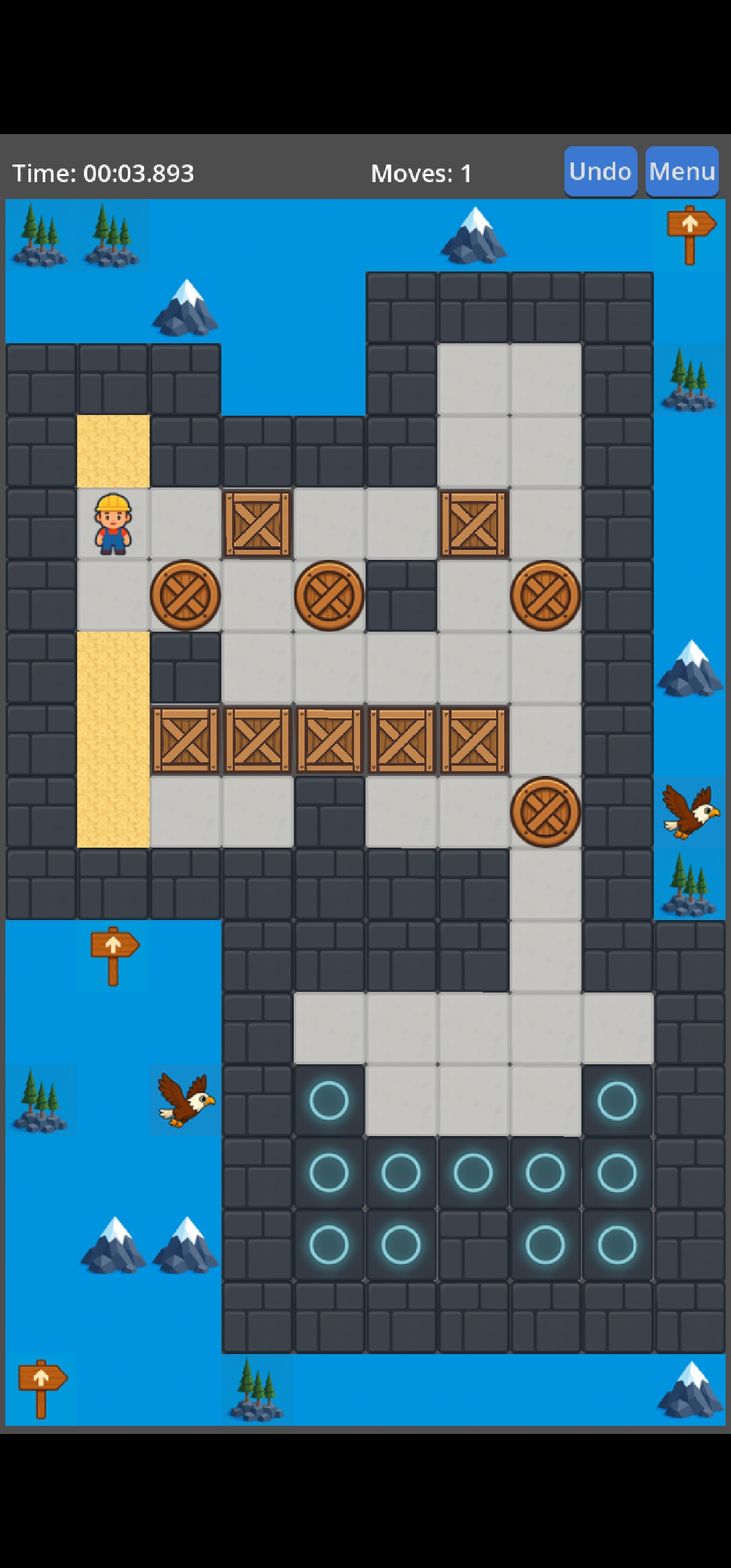
Cargo Shuffle is a modern Sokoban-style puzzle game set on a busy dockyard, where every crate and every tile matters. Levels are handcrafted to give you that “one more try” feeling: simple layouts at first, then cleverly layered challenges that reward planning, not frantic swiping. It’s built from the ground up for phones, so you can drop in for a quick puzzle or grind through a longer session without the game getting in your way.
- Style: Sokoban-style crate pushing on a clean, grid-based dockyard.
- Flow: Short, handcrafted levels ideal for a commute or coffee break.
- Controls: Simple swipe / tap movement tuned for one-handed phone play.
- Monetisation: No energy bars or “pay to skip”; just play at your own pace.
- Pros: Polished feel, works offline, satisfying difficulty curve.
- Cons: “Only” around 100 levels at launch – more coming over time.
2. Sokoban Original & Extra
The Retro Choice - 8.5/10Best for: Nostalgia & Purists
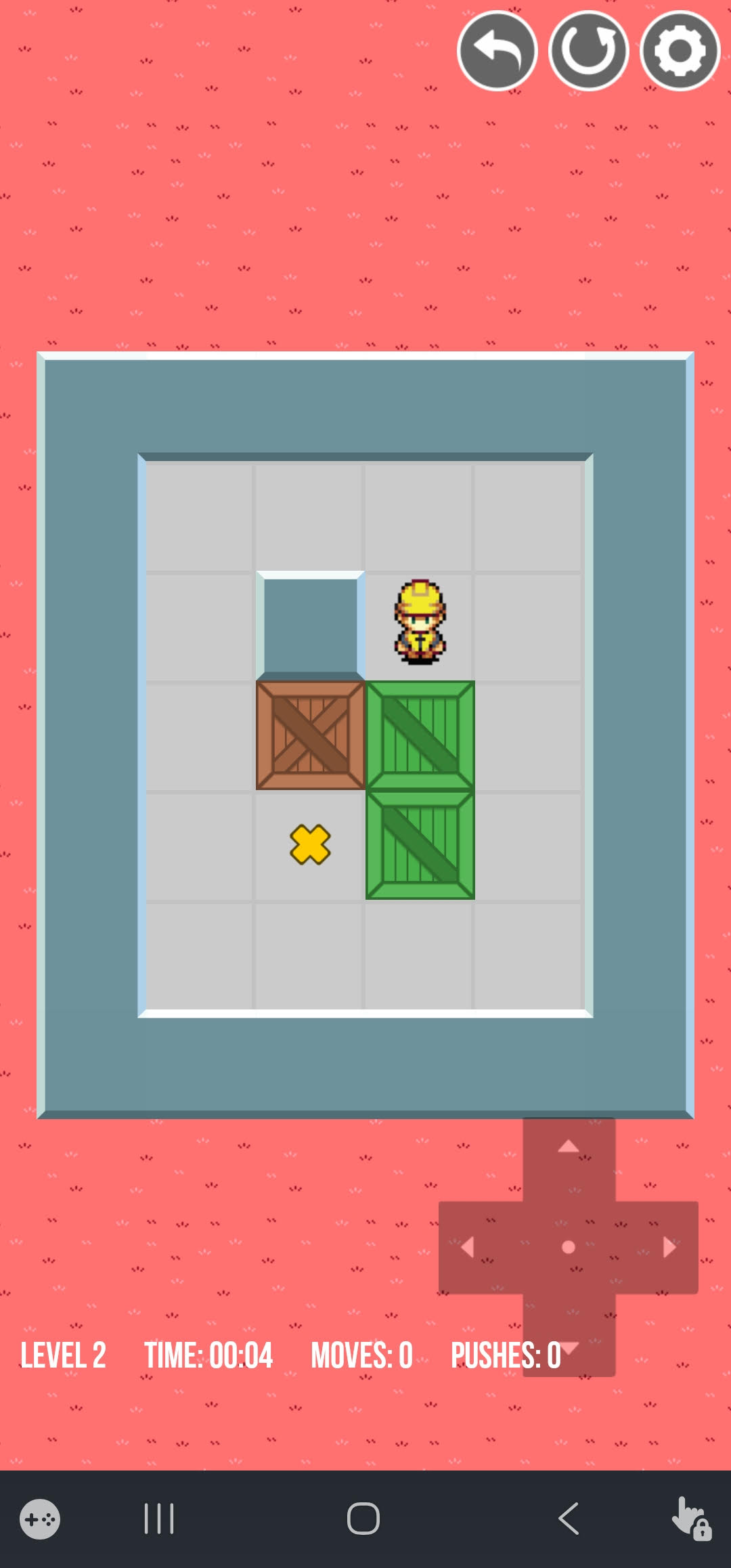
If you want to get as close as possible to the classic Sokoban experience, this is a great pick. It focuses on the original level sets (and extra packs) that made Sokoban famous: tight, elegant puzzles that ramp from gentle to absolutely brain-melting.
- Style: Uses traditional warehouse-style tiles and simple, readable graphics.
- Flow: Includes the original levels plus “Extra” stages for long-term replayability.
- Controls: On-screen D-pad style controls that feel like playing on an old-school console.
- Monetisation: Free to play with ad support throughout the game.
- Pros: Great if you want to experience Sokoban as a puzzle classic rather than a modern remix.
- Cons: Ads can be quite intrusive at times and the controls feel a little clunky compared with newer apps.
3. Sokoban Touch
The Official Smartphone Classic - 8/10Best for: Touchscreen Purists
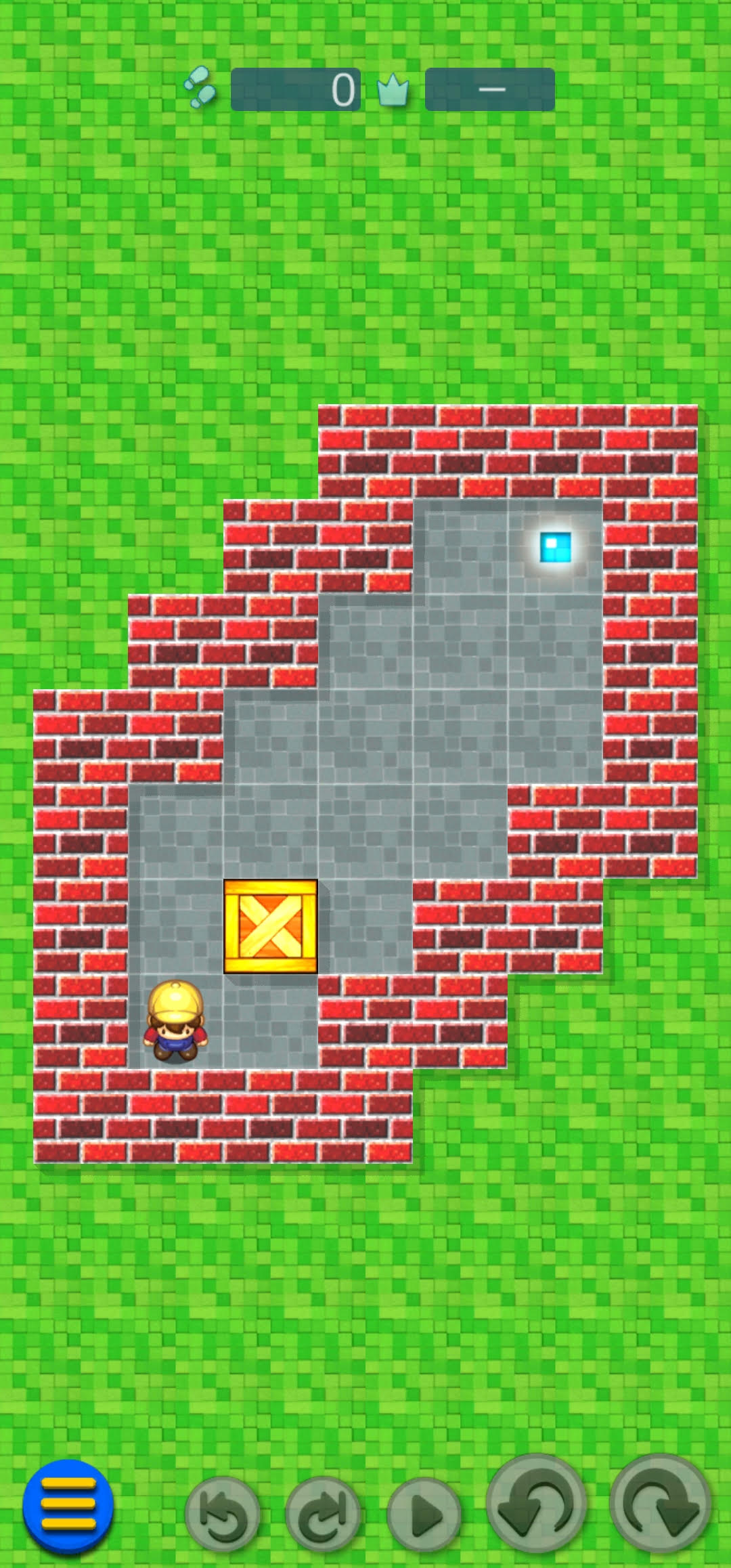
Sokoban Touch is an official Sokoban release built specifically for smartphones. It keeps the traditional box-pushing gameplay but adds modern conveniences like tap-to-move controls and a polished puzzle selection interface.
- Style: Very modern, polished visuals that reimagine the classic warehouse look for touchscreens.
- Flow: Official Sokoban app from the rights holders of the original series.
- Controls: Touch controls let you tap where you want your character to go, which feels great on mobile.
- Monetisation: Free version includes ads; you can pay to remove them and unlock more content.
- Pros: Includes a large set of puzzles, with more added over time via updates.
- Cons: The sleek modern presentation won’t fully scratch the itch if you’re chasing a strictly retro look and feel.
4. Quick Loader (Sokoban)
The Minimalist Free Option - 8/10Best for: Fans of Simple, No-Frills Puzzles
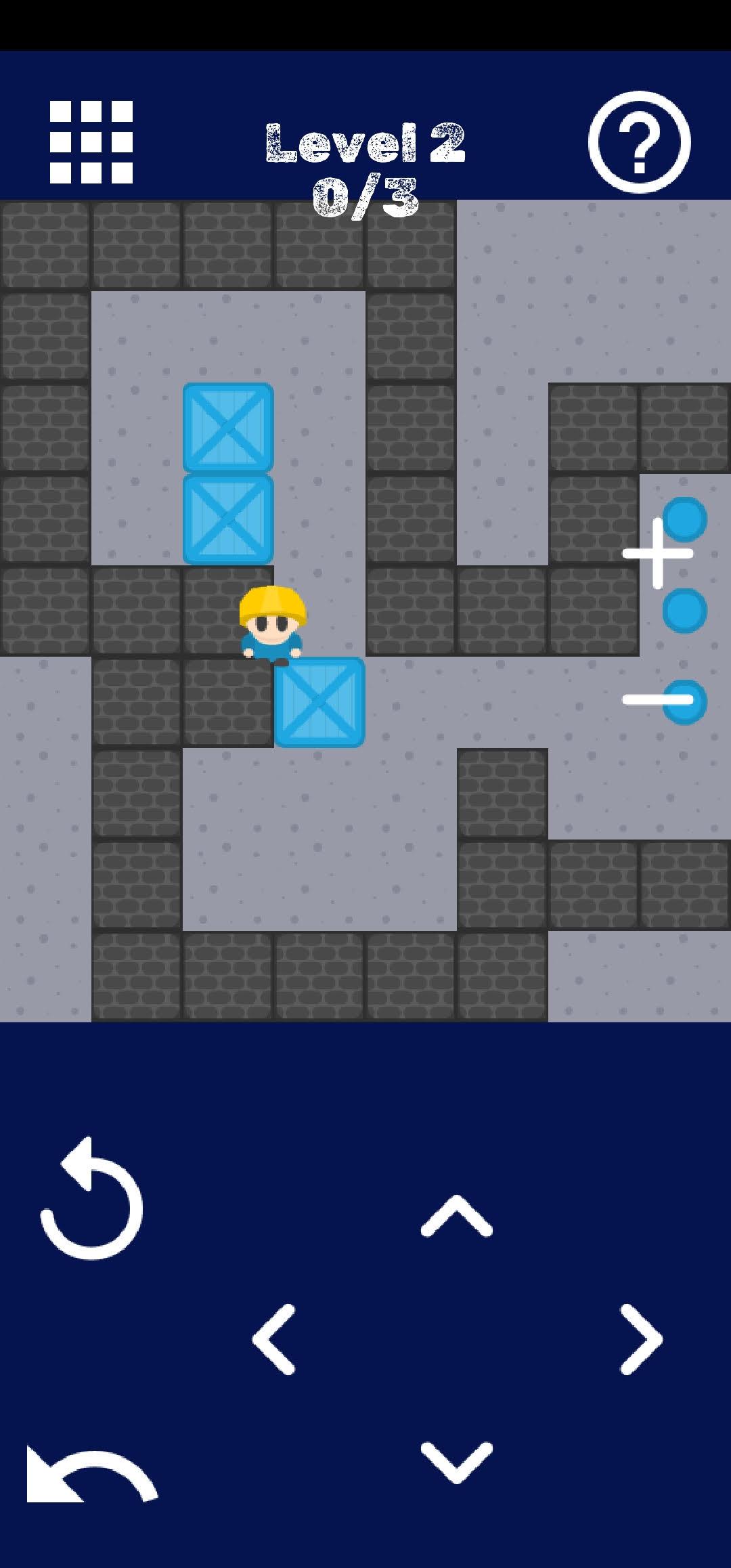
Quick Loader (Sokoban) is a lightweight Sokoban app that focuses on the core experience: push crates around a warehouse and get them onto the targets. No wild themes, no story – just straightforward box-pushing.
- Style: Classic Sokoban rules with a growing set of levels added over time.
- Flow: Drops you straight into the action with no intro or branding, so you’re playing within seconds.
- Controls: Basic on-screen D-pad controls for simple, direct movement.
- Monetisation: Free to download and play, with a very small install size.
- Pros: Perfect if you want something simple that runs on almost any Android device.
- Cons: Very bare-bones UI and controls, and the player can occasionally feel slightly off-centre when moving around.
5. Sokoban Push Puzzle
The Cross-Platform Classic - 7.5/10Best for: Players on Both iOS & Android
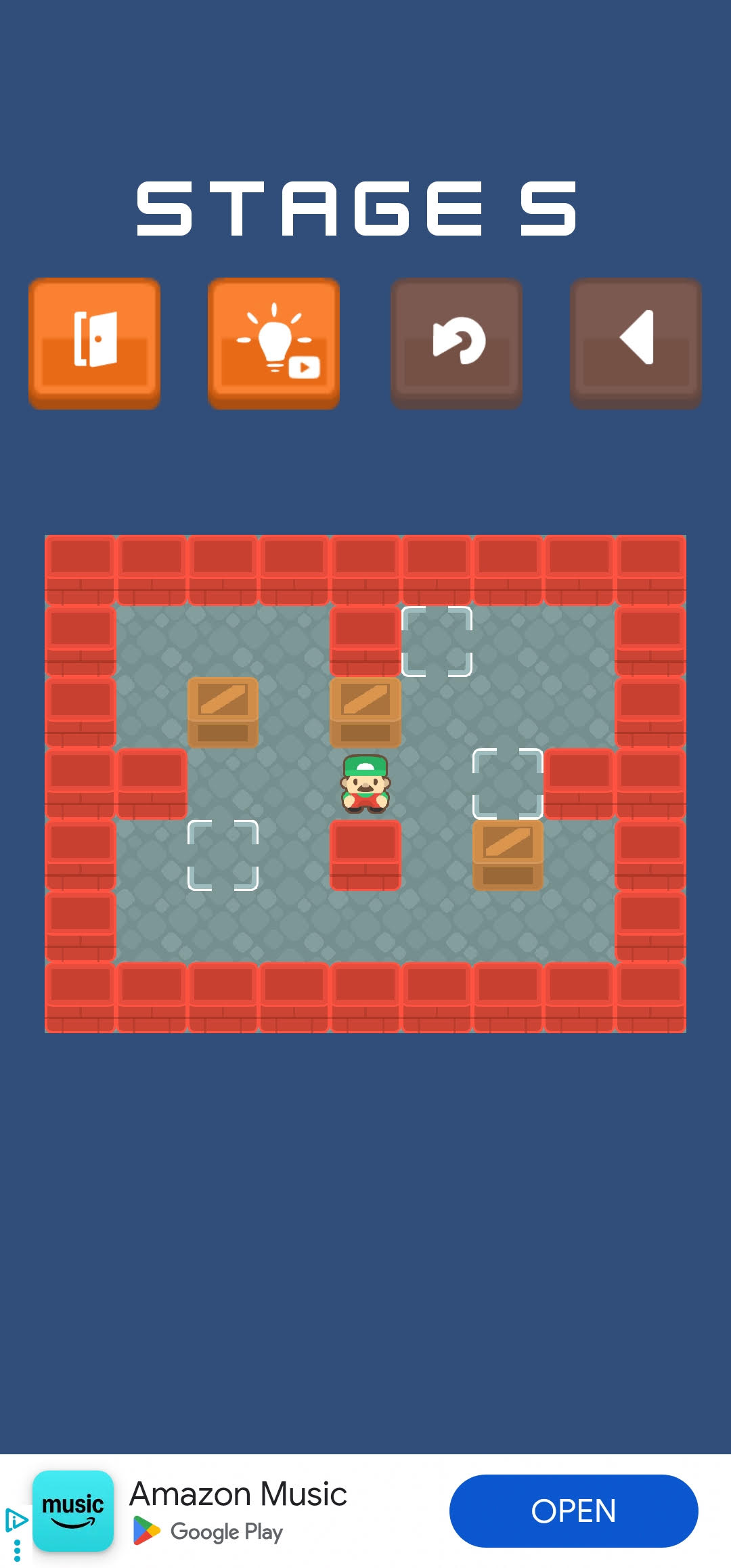
Sokoban Push Puzzle sticks very closely to the traditional Sokoban formula: you push blocks and store them in the specified locations. It’s available on both Android and iOS, so it’s a nice choice if you swap devices or want to recommend something friends can play regardless of platform.
- Style: Classic block-pushing gameplay with a clean, simple presentation.
- Flow: Good fit if you want a straightforward Sokoban app without a lot of extra systems layered on top.
- Controls: Swipe-based movement that feels natural on touchscreens.
- Monetisation: Ad-supported, with banner ads plus occasional full-screen ads and optional rewarded ads for hints/solutions.
- Pros: Ideal for short sessions and quick brain workouts.
- Cons: Basic graphics and a strictly linear level progression, so you can’t jump ahead to tougher stages.
Variants, Spin-Offs & Daily Challenges
One of the reasons Sokoban has survived so long is that designers keep remixing it. If you burn through the apps above, here are some variations and level sets worth knowing about:
- Microban level sets: curated collections of smaller, concept-focused Sokoban puzzles. They’re great for beginners because each level tends to highlight one specific idea, but they’re still surprisingly clever.
- 3D Sokoban games: some titles reimagine Sokoban in full 3D or isometric 3D. These can look beautiful, but they also change how you “read” the puzzle, so expect an extra learning curve.
- Boxman / Boxxle-style clones: plenty of games use different names like “Boxman”, “Boxxle” or “warehouse keeper” while keeping the same push-only rules. If you enjoy classic Sokoban, these are usually safe bets.
- Daily Sokoban: a few sites and apps give you a daily Sokoban puzzle, much like a crossword or daily Sudoku. They’re perfect if you just want one good brainteaser with your morning coffee.
- Console & PC versions: if you prefer to play on a bigger screen, there are Sokoban-style games on PC, Nintendo Switch, PlayStation and Xbox – often bundled with hundreds of levels and nice controller support.
App vs. Playing Online
Lots of people still search to play Sokoban online in a browser. There are some excellent web-based versions and archives, including collections that let you play famous level sets like Microban straight in your browser.
The trade-off is that browser versions often rely on cookies or local storage. If you clear your data or switch device, your progress can vanish. A dedicated app – like the ones listed above – will usually:
- Remember which levels you’ve beaten.
- Work offline (useful for flights or underground commutes).
- Offer handy features like unlimited undo and quick level restart.
My own bias: I like a good web Sokoban when I’m at a desktop, but on phones and tablets I’d rather have a polished app that remembers exactly where I left off.
Strategy: How to Solve Hard Sokoban Levels
Whether you’re playing a retro classic Sokoban, a modern 3D variant, or a Sokoban-style game like Cargo Shuffle, the logic you use to solve tough levels is mostly the same.
1. Avoid the Deadlock
Rule one: never push a box into a corner unless that corner is a goal. Once a crate is stuck against two walls, it is effectively “dead” and the level is unsolvable. The same goes for some wall edges and narrow corridors – if a box can’t ever reach a goal from there, don’t push it there.
2. Beware the 2x2 Square
Pushing four crates into a neat little 2x2 block almost always creates a permanent deadlock, because there’s no way to separate them again. Try to keep your boxes in looser formations and think about how they’ll have to slide past each other later in the solution.
3. Work Backwards from the Goals
A lot of Sokoban solver algorithms (including hobby projects in Python and JavaScript) reason backwards: they imagine the crates already on the goals and figure out how they could have been pushed there.
You can do a human version of this. Look at a goal tile and ask:
- From which directions can a crate be pushed onto this tile?
- Where does the player need to stand to make that push?
- Can the crate still be moved afterwards, or is that its final resting place?
If you mentally “pull” the crate backwards from the goal instead of only pushing forward from the start, a lot of tricky levels suddenly make more sense.
4. Use Undo and Restart Generously
Sokoban is a game about planning ahead, but it’s also a game about experimenting. Don’t be afraid to nudge a crate, see what happens, then hit undo. Many of the best apps support unlimited undo and fast restart – use them to explore ideas rather than trying to play perfectly on the first attempt.
A Brief History of Sokoban
Sokoban started life in Japan in the early 1980s. It was designed by Hiroyuki Imabayashi and first released in 1982. The name literally means “warehouse keeper”, which fits the theme perfectly: you play as a worker tidying up a cluttered store room by pushing crates onto their marked storage locations.
Over the decades it’s been ported to home computers, consoles, web browsers and, eventually, smartphones. Thousands of custom levels have been created, and the core mechanic has inspired everything from minimal indie puzzle games to elaborate dungeon crawlers with Sokoban-style movement.
Despite all the technological change since 1982, the heart of the game hasn’t really needed updating: a tight grid, simple rules, and puzzles that reward patience and careful thought.
Ready to test your brain?
If you like clean, focused Sokoban-style puzzles, start with our top pick. It’s designed for quick sessions, no energy timers, and plenty of “aha!” moments.
Play Cargo Shuffle